![[background image] image of a welcoming office environment (for a travel tech)](https://cdn.prod.website-files.com/6920432e75f82656c9390147/69c2ce50d7b5744aca3f3dd6_idas15.jpg)
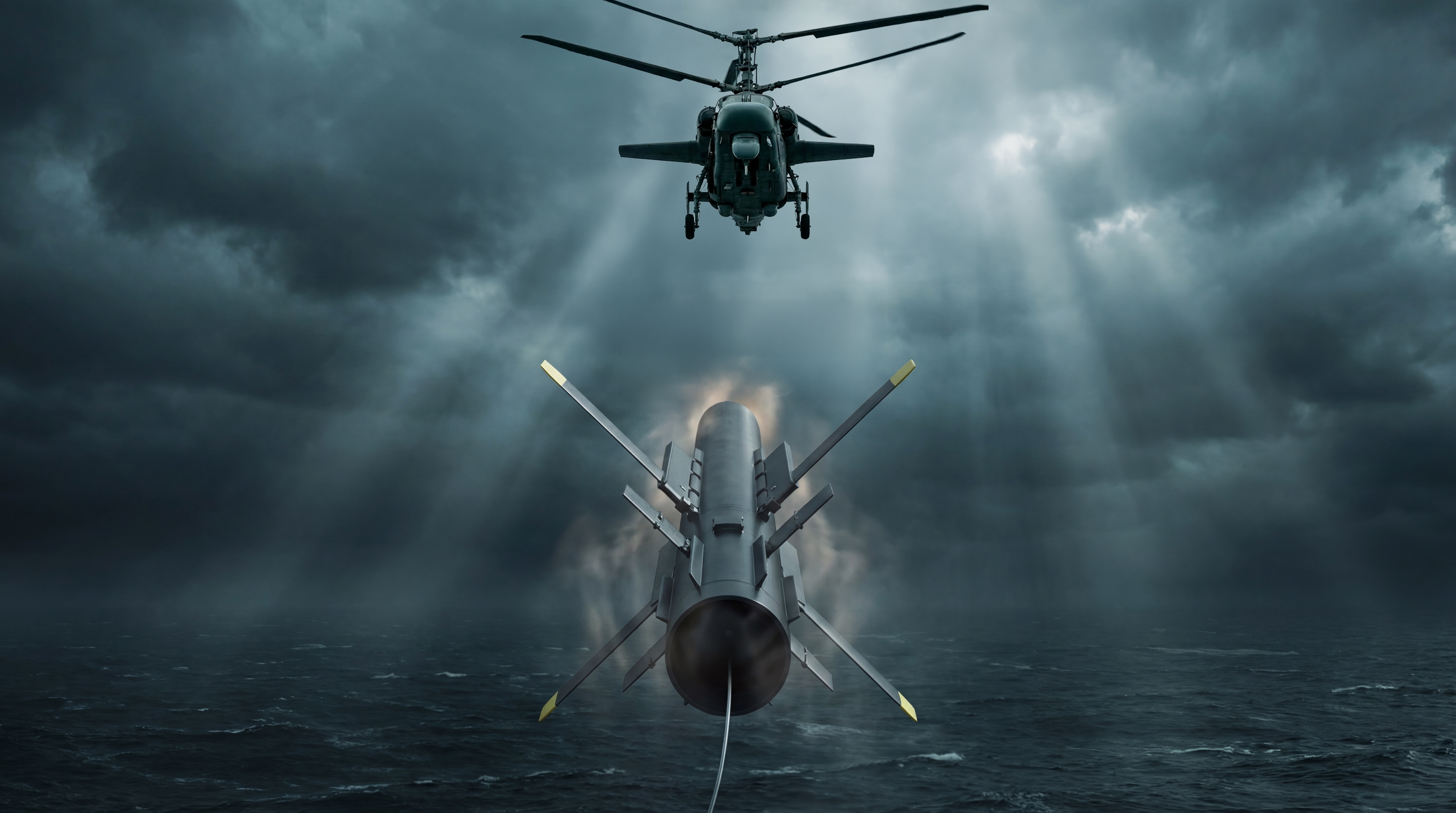
Une véritable révolution pour les opérations sous-marines. IDAS permet pour la première fois de se défendre contre les hélicoptères anti-sous-marins depuis une position immergée, sans exposer les capteurs, tout en garantissant que l'opérateur reste à tout moment maître de la prise de décision.

Jusqu’à présent, les sous-marins étaient sans défense face aux hélicoptères de lutte anti-sous-marine — des appareils rapides, difficiles à détecter, dotés de capacités sonars supérieures et capables de déployer activement des armes anti-sous-marines. Le système IDAS comble cette lacune critique en matière de capacités. Grâce à la liaison par fibre optique, l'opérateur à bord du sous-marin immergé peut détecter et engager un hélicoptère hostile, tout en conservant le contrôle total jusqu'à l'impact. Cette toute nouvelle capacité pour les sous-marins élargit également leur zone d'opération.
Grande mobilité, trajectoires de vol imprévisibles
Pratiquement indétectable en mode passif ou sans sondeur à balayage
Capable de transporter et de déployer activement des armes anti-sous-marines
![<subject>[interface] image of a screenshot of a learning module (for a edtech))</subject>](https://cdn.prod.website-files.com/6920432e75f82656c9390147/69c2d5a37c0f77819663c37f_BxKwmzo_HY6qdtbOon_Oz_8KKezplk.jpg)
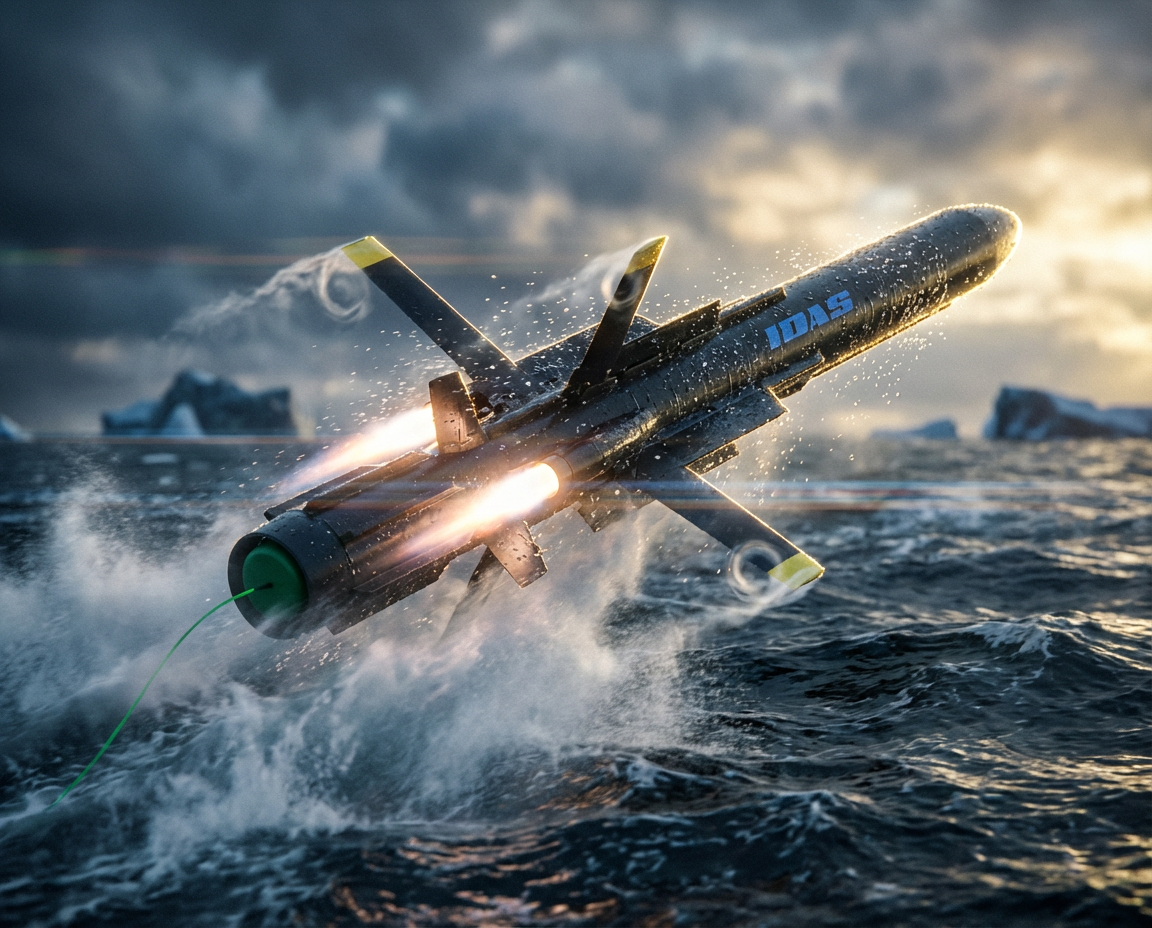
Pas de remontée à la surface, pas d'exposition des capteurs : le missile est éjecté directement du tube lance-torpilles alors que le navire est complètement immergé
La liaison par fibre optique permet de mettre à jour la cible et d'interrompre la mission à tout moment pendant le vol, jusqu'à la phase terminaleFibre-optic link enables target Update and mission abort at any point during flight, up to terminal phase
Une technologie éprouvée de tête de guidage infrarouge issue du programme de défense aérienne IRIS-T – précise et fiable
plusieurs missiles par conteneur de lancementmultiple missiles per ejection container
Compatible avec tout tube lance-torpilles standard de 21 pouces – optimisé pour les sous-marins des classes U212A et U212CDCompatible avec tout tube lances
Conçu pour résister à des mois d'exposition à l'eau de mer corrosive à l'intérieur du tube lance-torpilles sans perte de fonctionnalité
1
Le sous-marin détecte l'hélicoptère anti-sous-marin ennemi à l'aide de ses propres capteurs. Seuls le relèvement de la cible et une estimation approximative de la distance sont nécessaires.
2
Lancement depuis un tube lance-torpilles standard de 21 pouces tout en restant entièrement immergé. Le moteur de la fusée est allumé sous l'eau, à l'extérieur du sous-marin.
3
Le missile perce la surface de l'eau et le propulseur s'allume. Le missile se dirige vers la zone cible.
4
La tête de guidage infrarouge se charge de la détection active des cibles. Les images infrarouges sont transmises en temps réel au sous-marin.
5
L'opérateur peut intervenir à tout moment : ajuster la cible, interrompre la mission ou laisser le chercheur se connecter et se diriger de manière autonome vers la cible.

![<subject>[background image] image of modern library (for an edtech)</subject>](https://cdn.prod.website-files.com/6920432e75f82656c9390147/69a6fed916bf0ebd233ab564_vM3HiqDLBxG7i0O9iLM1l_5fX2PB7e.png)


![[interface] screenshot of the software interface (for a productivity tools business)](https://cdn.prod.website-files.com/6920432e75f82656c9390147/69e65fcca71bd400737efa57_LL92ZE4utTWbaHKm9euVB_ZvuSzzoy.jpg)
Le consortium IDAS rassemble l'ensemble de la chaîne industrielle — de la tête de recherche au système de communication par fibre optique, en passant par l'intégration sous-marine — sous une seule et même autorité de programme.
Une expertise interne complète pour le missile IDAS : développement et production du câble à fibre optique.
Compétence interne complète pour le système d'éjection IDAS et son intégration dans les sous-marins et les équipements périphériques.
BAAINBw en tant que pouvoir adjudicateur pour le contrat de développement et de qualification.
L'IDAS (Interactive Defence and Attack System for Submarines) est un système de missiles guidés lancés depuis des sous-marins, conçu principalement pour la défense contre les menaces aériennes.
Le système est développé conjointement par TKMS et Diehl Defence dans le cadre d'un contrat passé avec l'Office fédéral allemand des achats et de l'armement (BAAINBw).
L'IDAS est lancé depuis un tube lance-torpilles standard à l'aide d'un système d'éjection hydraulique. Le moteur-fusée s'allume une fois que le missile a quitté le sous-marin, et celui-ci passe alors en vol aérien.
Convient pour une installation sur les sous-marins TKMS équipés de tubes lance-torpilles de 21 pouces.
Le système IDAS est actuellement en cours de développement et de qualification et sera commercialisé parallèlement à la mise en service du 212CD.


![[background image] of downtown area (for a roofing contractor)](https://cdn.prod.website-files.com/image-generation-assets/cfd7de40-a42a-4f40-81d4-d145cda8403a.avif)